



Compression Molding: Process, Materials & Uses
Davies Molding is a U.S.-based compression molding company specializing in thermoset and composite molded components for high-performance industrial, aerospace, defense, electrical, medical, and OEM applications. With over 90 years of molding experience, Davies supports high-volume production programs requiring heat resistance, dimensional stability, electrical insulation, and long-term durability.
Compression molding (moulding in the UK) uses heat and pressure to cure a measured charge of thermoset or composite material in a heated mold, forming rigid, high-performance components. The process is commonly used for custom molded applications requiring heat resistance, electrical insulation, structural integrity, and long-term durability in demanding operating environments.
Jump to Section
When Should You Use Compression Molding?
Compression molding is the right choice when your application demands durability, material performance, and reliability in demanding environments.
- When thermoset or composite materials are required: Ideal for applications using phenolic, melamine, epoxy, SMC, or BMC where material performance is critical
- When parts must withstand heat and maintain structural integrity: Well-suited for components exposed to high temperatures or long-term mechanical stress
- When chemical resistance is important: Performs well in environments involving oils, fuels, and common industrial chemicals (depending on formulation)
- When working with larger or thicker part geometries: Efficiently molds parts without the challenges of long flow paths found in other processes
- When material efficiency and consistency matter:
- Minimizes waste while delivering repeatable, high-quality parts in production
Why it takes experience
Thermosets go through an irreversible chemical reaction. If temperature, pressure, or charge prep are off, parts may under-cure or lose stability. Our team dials in charge weight, mold temperature/pressure, venting, and tool design to keep runs consistent from first shot to full production.
What is the Compression Molding Process?
The first step is selecting the material that best fits the job.

Diagram of the compression molding process
When these materials are subjected to heat and pressure, they flow, cure, and harden into a strong, rigid part.
Typically, thermoset and composite materials are used in one of the following forms:
- Granules
- Putty-like masses
- Preforms
After selecting the material, the process begins by preheating the mold to a temperature appropriate for the resin system. Preheating helps the molding material fill the cavity smoothly and consistently, which minimizes defects.
Once the tool reaches temperature, a measured charge (often a preform) is placed inside. The mold closes and pressure is applied so the charge fills all features of the cavity and conforms to the tool.
Under heat and pressure the thermoset resin crosslinks, increasing stiffness, heat, and chemical resistance. Cure time depends on the resin and part geometry. After curing, the part is removed, deflashed or finished as needed, and inspected.
Performance Advantages of Compression Molding
This process is well suited to large or complex parts with a good surface finish and solid dimensional control. One key advantage is the reduced shear during molding, which helps minimize knit lines; those marks where resin flows meet and rejoin. Fewer knit lines generally means stronger, more reliable parts than you’ll see with long flow paths in injection molding.
Another plus is how the process preserves fiber integrity in composites. Reinforcements like fiberglass drive strength and stiffness; with less shear than injection, fiber length and alignment are better maintained, which improves performance. Many thermoset materials (e.g., phenolic and epoxy) also offer strong heat and chemical resistance; useful around oils, fuels, and common cleaners.
What Materials Are Used for Compression Molding?
Davies Molding works with a wide range of thermoset and composite materials used in compression molding applications requiring heat resistance, dimensional stability, electrical insulation, chemical resistance, and long-term durability. 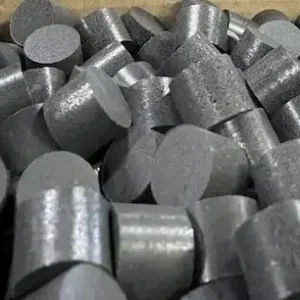
These materials are commonly selected for aerospace, defense, electrical, industrial, transportation, appliance, and medical applications where structural integrity and thermal performance are critical.
Common options include:
- Sheet Molding Compound (SMC)
- Bulk Molding Compound (BMC)
- Phenolics
- Melamines
- Silicone Rubber
- Polyesters
- Ureas
- Epoxies
Davies’ compression molding expertise supports durable, high-performance components across aerospace, defense, medical, industrial, and electrical applications.
In thermoset molding, high-temperature materials maintain shape with minimal shrink, even under load and heat. That dimensional stability helps parts with varied wall thicknesses resist warping or distortion. Many thermoset grades also provide strong heat resistance, chemical resistance, and long-term dimensional stability in demanding operating environments.
Compression vs. Injection Molding – What’s the Difference?
Both methods shape plastic parts, but they work differently. In compression molding, a pre-measured charge goes into a heated mold; the tool closes, pressure is applied, and the part cures into shape. It’s a strong option for larger or thicker parts and for thermoset programs (e.g., phenolic, melamine, SMC/BMC).
Injection molding (usually thermoplastics) melts resin and injects it into a closed mold under high pressure. It’s fast and highly repeatable for high-volume production and intricate details. For thermoset needs, high-heat environments, or when knit-line control and fiber integrity are priorities, compression molding may be the better fit.
Choosing between the two comes down to the part’s size, material, and production volume.
Compression Molding vs. Injection Molding
Compression molding and injection molding each offer advantages depending on the material, part geometry, production volume, and performance requirements. Compression molding is commonly used for thermoset molding applications requiring heat resistance and dimensional stability.
| Compression Molding | Injection Molding |
|---|---|
| Ideal for thermoset materials | Common for thermoplastics |
| Better fiber integrity | Faster cycle times |
| Lower shear stress | Better for intricate details |
| Excellent heat resistance | Greater material flexibility |
| Strong chemical resistance | Chemical resistance depends on resin selection |
| Excellent dimensional stability after curing | Dimensional stability depends on material and cooling behavior |
| Strong wear resistance in demanding environments | Wear resistance depends on material grade and additives |
| Excellent electrical insulation properties | Electrical performance varies by thermoplastic resin |
| Strong structural integrity after curing | Structural performance depends on resin and reinforcement |
| Well suited for larger or structural parts | Excellent for small precision parts |
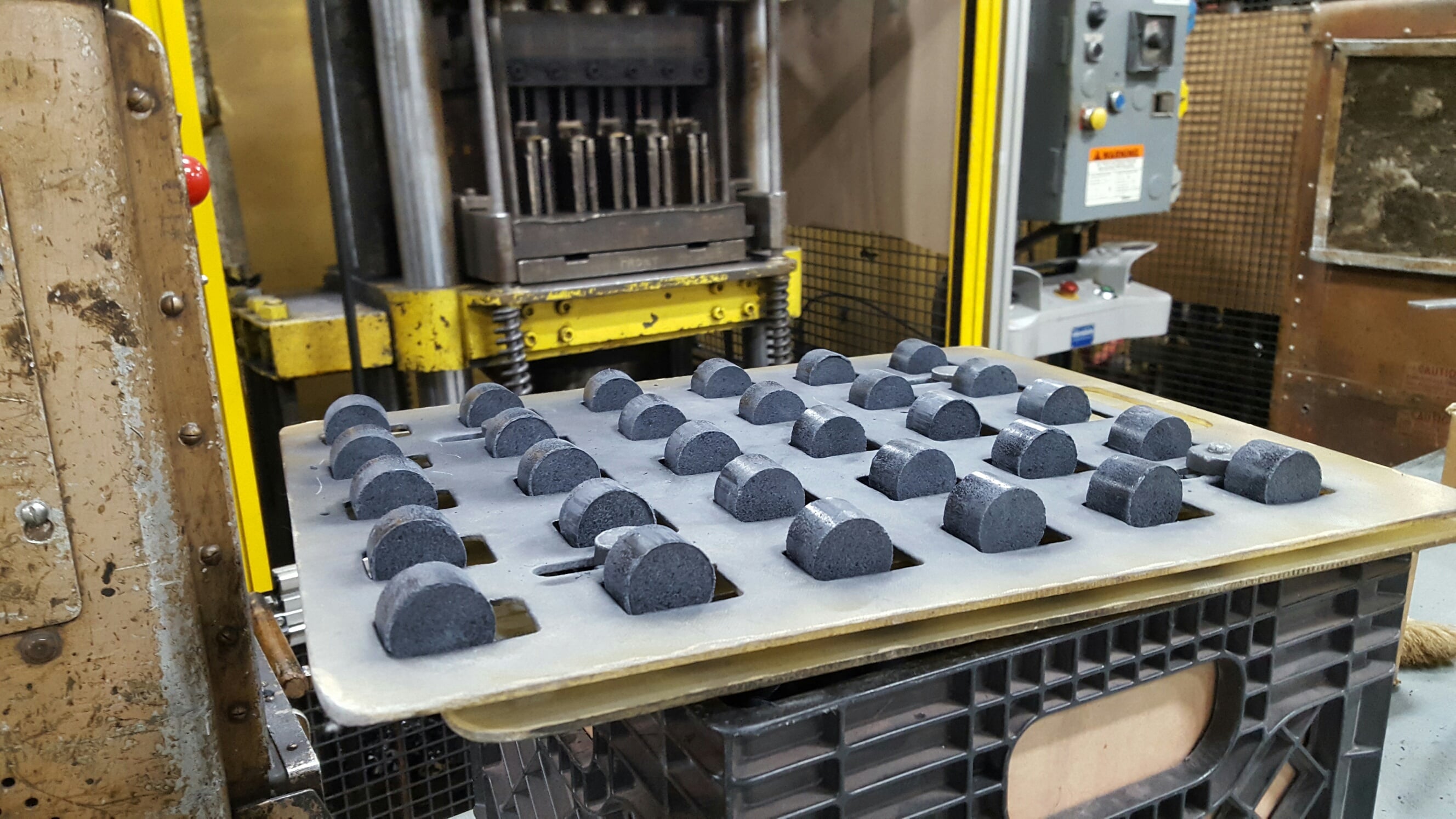 Advanced Compression Molding Capabilities
- 45 thermoset compression molding presses
- Press capacities ranging from 40–500 tons
- 100,000 sq. ft. U.S.-based manufacturing facility
- High-volume OEM production support
- Secondary machining and assembly operations
- In-house engineering expertise
- ISO-certified quality systems
