


Mold Transfer Without the Risk
Precision mold transfer and tool transfer services for high-volume production
A proven mold transfer and tool transfer process without downtime, surprises, or quality drift.
Transferring molds isn’t just a tooling decision. It’s a production risk, a supply chain concern, and often a career-defining moment for the people responsible.
Davies Molding works with manufacturers who need to move molds from another molder, because of capacity constraints, quality issues, ownership changes, or growth and want the transition handled deliberately, quietly, and correctly.
When companies consider a mold transfer or tool transfer
Most teams don’t plan to move molds. They’re forced to evaluate it when something changes:
- Production volumes exceed a supplier’s capacity
- Quality or consistency begins to slip
- Tool maintenance becomes reactive instead of controlled
- Lead times stretch and schedules become unreliable
- Internal priorities shift after an acquisition or reorganization
- Molder goes out of business
If any of this sounds familiar, you’re not alone and you’re not late.
What makes mold and tool transfers risky
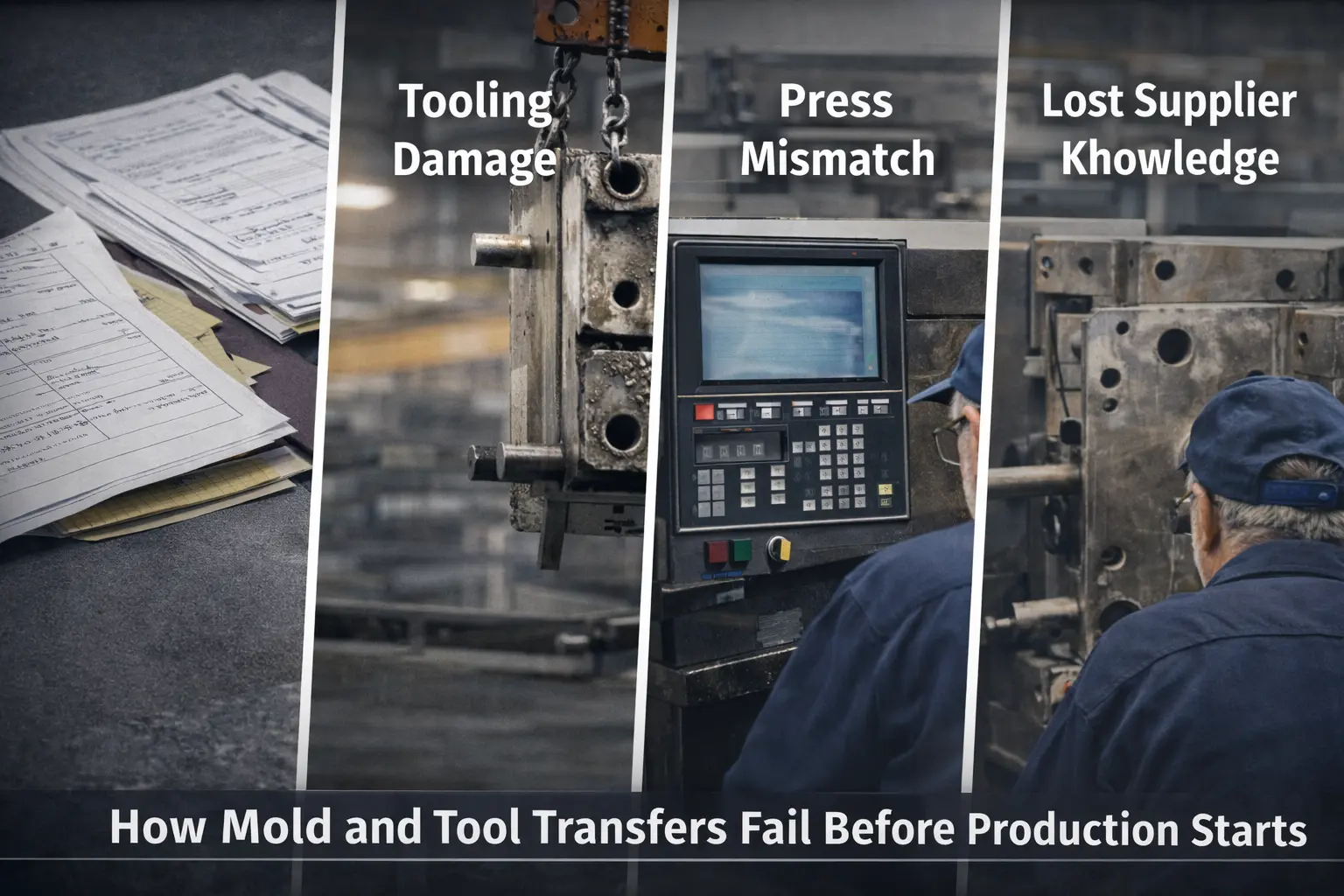
A mold transfer can fail long before the first part ships.
Common risks include:
- Unclear documentation or undocumented process settings
- Tooling damage during removal or transport
- Differences in press capabilities and controls
- Unexpected validation delays
- Lost tribal knowledge from the previous supplier
Davies’ approach is built to surface and address these risks before production is on the line.
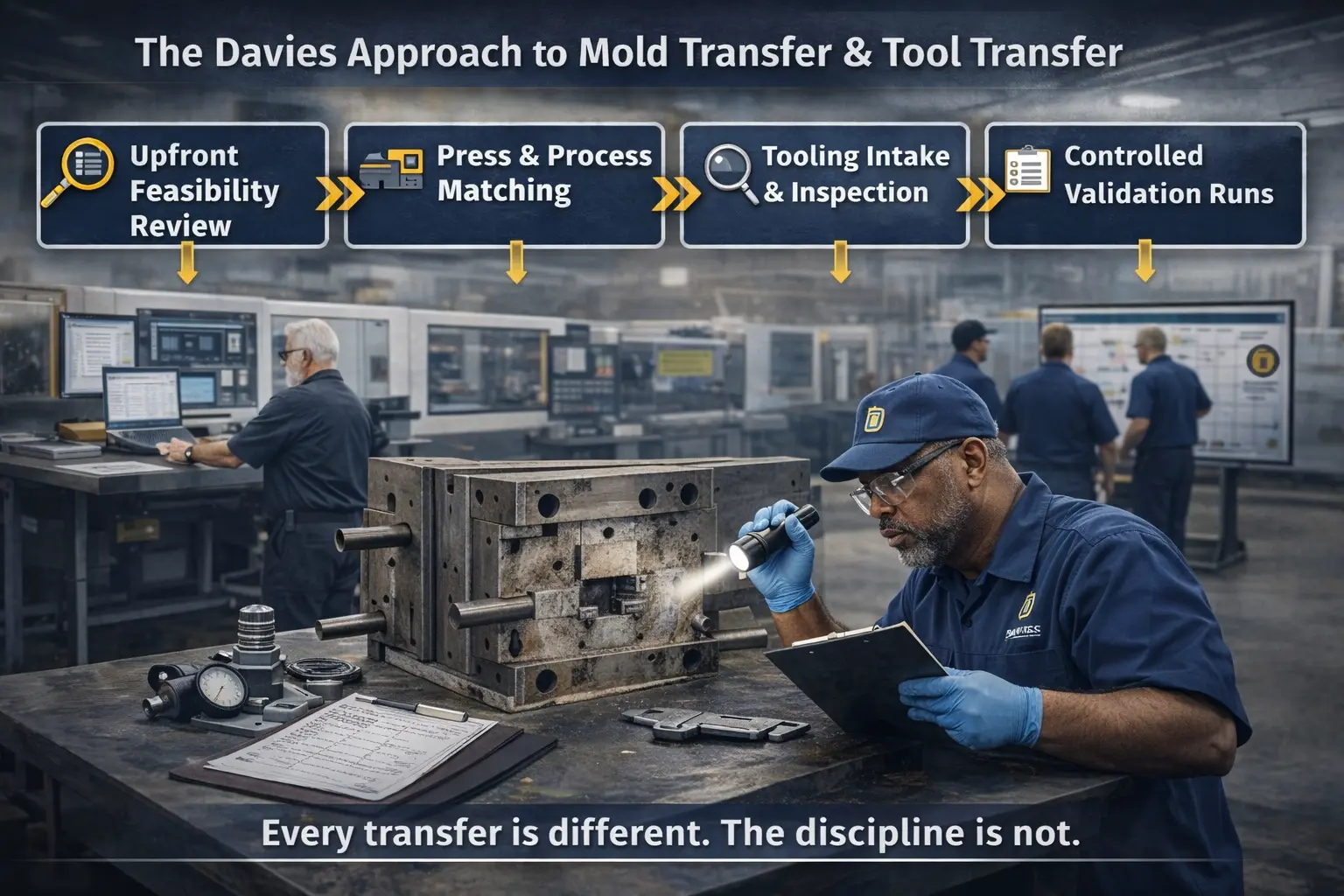
The Davies approach to mold transfer and tool transfer
We treat mold transfers as controlled production transitions not emergency moves.
Our process typically includes:
- Upfront feasibility review
Evaluating tooling condition, part requirements, materials, tolerances, and production targets - Press and process matching
Aligning molds with the right equipment, automation, and secondary operations - Tooling intake and inspection
Documenting condition, addressing wear, and establishing maintenance baselines - Controlled validation runs
Establishing repeatable processes before full-scale production - Production ramp with accountability
Clear communication, defined milestones, and predictable timelines
Every transfer is different. The discipline is not.
Why companies move molds to Davies
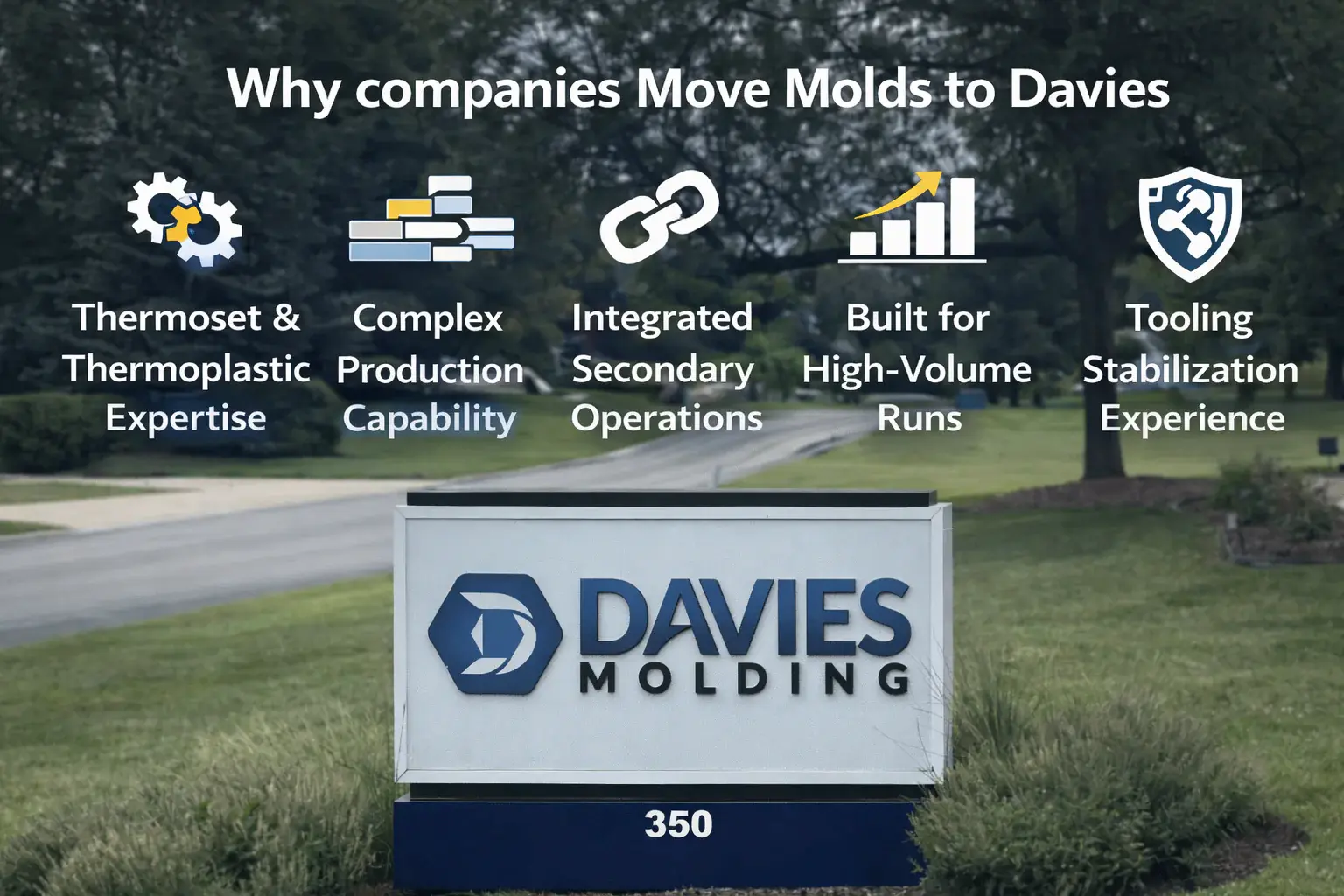
Davies Molding is best suited for high-volume production programs where consistency, scale, and long-term performance matter.
Customers choose Davies because of:
- Deep experience with thermoset and thermoplastic molding
- Proven capability in complex, multi-step production environments
- In-house secondary operations that reduce handoffs and variability
- A production mindset built for runs over 100,000 units
- A team accustomed to inheriting and stabilizing existing tooling
We don’t just receive molds, we take responsibility for what they produce.
What a successful transfer looks like
A successful mold transfer should:
- Protect part quality from day one
- Maintain production continuity
- Reduce long-term risk compared to the previous supplier
- Create clearer ownership of tooling and process control
If your internal definition of success includes sleeping at night, we’re aligned.
Start with a mold transfer conversation
Not every mold should be transferred and not every program is a fit. That’s why the first step is a conversation, not a quote.
We’ll talk through:
- What’s prompting the evaluation
- Tooling and production requirements
- Risks that need to be managed internally
- Whether Davies is the right long-term partner
If you’re considering a mold transfer, let’s talk before timelines get tight.
Schedule a mold transfer conversation